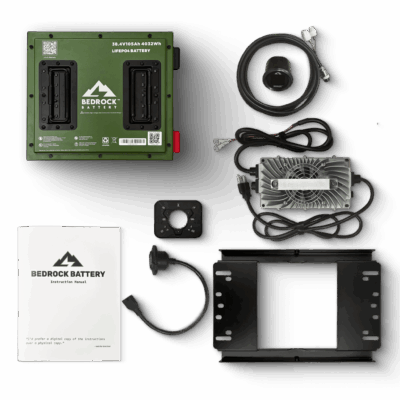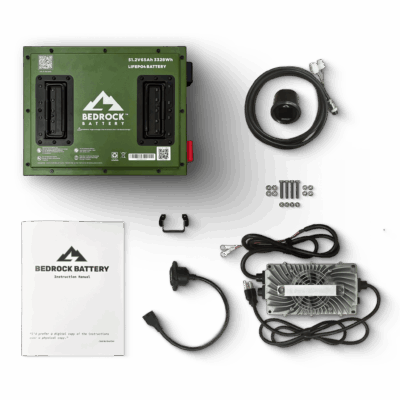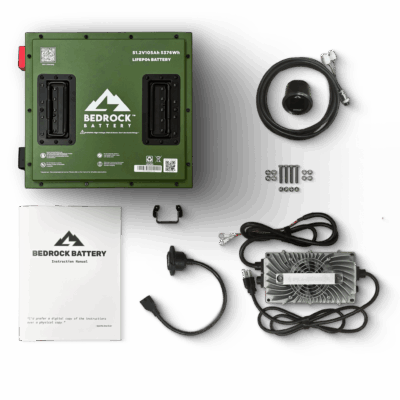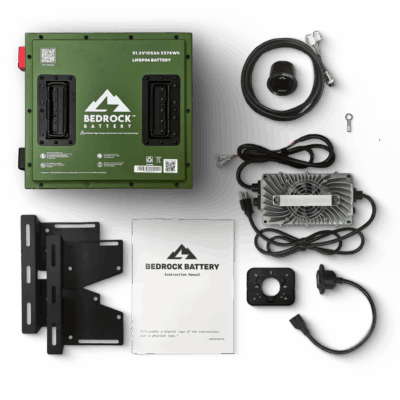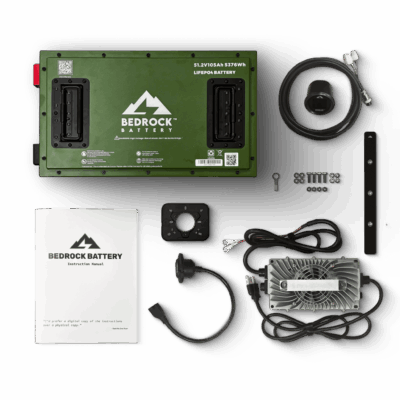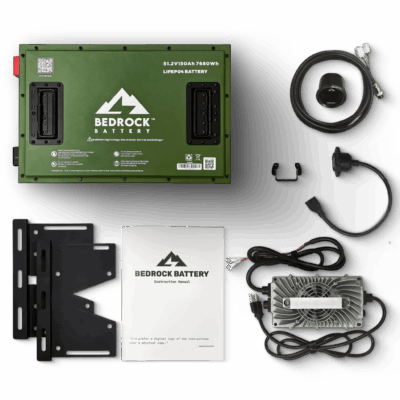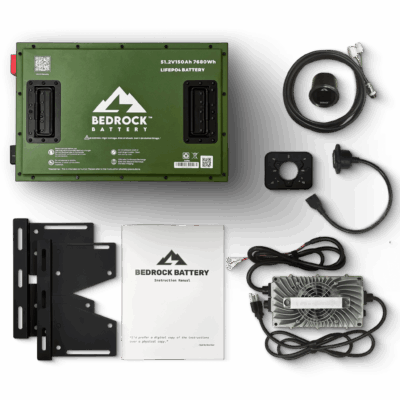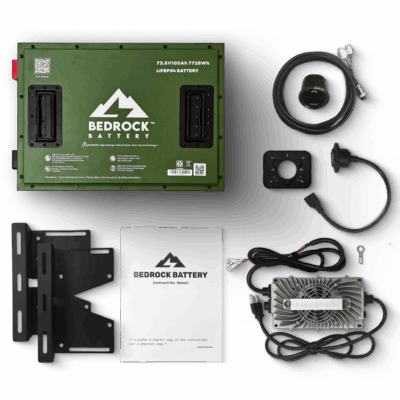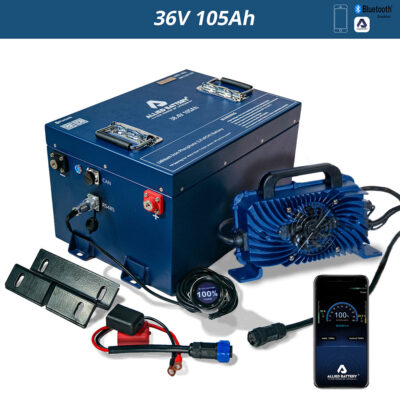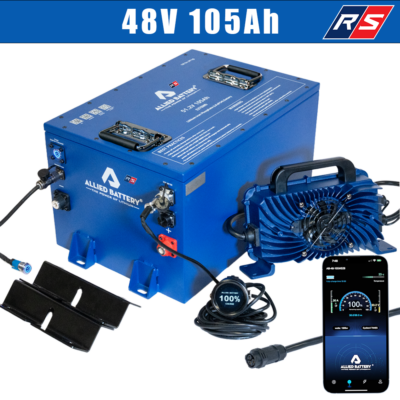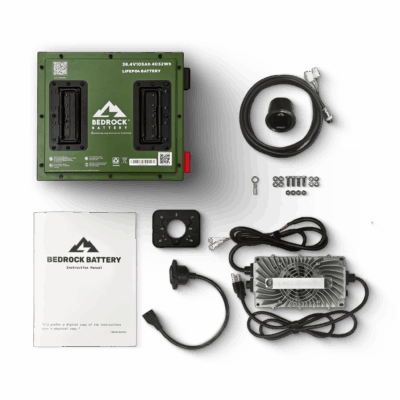


We ship golf cart batteries to Hawaii resort communities. We do not have a store, a driver, or a cart barn there. Salt air starts the day the crate arrives. Inspect for damage and tell us within two days.
Towns in Hawaii
Each town below is a place we ship to. Open it for the local conditions. Then use the fitment guide for the cart, because a town does not pick a bracket.
Ordering into Hawaii
Voltage first. Six 6-volt batteries are 36 volts. Six 8-volt, eight 6-volt, or four 12-volt deep-cycle batteries are 48 volts. A 72-volt cart stays on a 72-volt kit. Year bands second. Precedent 2004-2008 is not 2009-later. Yamaha Drive 2007-2010 is not a Drive2. EZGO RXV metal, plastic, and ELiTE are three carts. We ship into Hawaii. Local delivery is only the area named on the shipping page. Hawaii is not automatically inside that area because this page exists. Prices stay on the product page. Bedrock conversion kits ship free. Allied Lithium packages ship free from Allied.
Shipping, and what a city page means
We ship golf cart batteries. We do not publish a storefront street address. Bedrock conversion kits ship free. Allied Lithium packages ship free from Allied. Free shipping on any other brand is not something this article grants.
Local delivery exists only for the area named on the shipping page. A state page or a town page means that community is one we write about and ship to. It is not a claim that a driver covers that town. If the shipping page does not name your street, the order ships.
Heat, garages, and flooded water loss
A closed garage in Arizona, the Coachella Valley, or a Florida afternoon can sit far above the outside air. Flooded batteries use water faster in that heat. Check them on a schedule, after charging, with distilled water. Lithium packs and chargers also have temperature limits. Do not charge a lithium pack in a heat-soaked closed garage if the battery or the charger is too hot to touch. Let the space cool, or charge in a cooler hour.
Heat is not a voltage change. A 48-volt cart does not become a 36-volt cart because the state is hot. It does become a cart that needs its water, its ventilation, and its charger checked.
Salt air and corrosion
Coastal carts, island carts, and carts parked near a bay grow corrosion on posts and lugs. White or green crust raises resistance. The cart feels weak. The charger works harder. Disconnect the main negative first, neutralize the crust with a baking-soda paste, brush the post and the lug, dry everything, and reassemble the lug flat and tight. A thin film of dielectric grease after it is tight slows the next round.
Salt is not a reason to leave caps off a flooded battery. It is a reason to keep the tops of the cases clean so a film of moisture and acid does not leak current between posts. If the copper strands under the insulation are green, replace the cable. A new battery on a rotten cable will not fix the cart.
S, UT, and UTL terminals
Lead-acid golf batteries are sold with more than one post. An S post, a UT post, and a UTL post do not accept the same lug the same way. Look at the cable end you already have before you pick the dropdown on the product page. Interstate listings in this shop let you choose the terminal on most models.
Bending a lug to reach the wrong post guarantees a loose connection. If the cables are burned, replace the cables and then match the new lugs to the new posts. Do not pick a terminal style because it is the first option in the list.
Partial charges: lithium yes, lead-acid no
Lithium iron phosphate is fine with a partial charge. Plug it in when you get home, unplug it when you leave, and do not wait for a once-a-week deep cycle. Lead-acid wants to be returned to a full charge after you drive. Leaving a flooded pack at half charge is how sulfate hardens.
That difference is why the charger has to match. A lead-acid charger’s finish voltage and equalize behavior are wrong for lithium. A lithium charger’s finish is wrong to interpret with a lead-acid hydrometer. Pick the chemistry, then the habit. Do not teach a household one rule for both.
A load test the household can actually do
Charge the cart, unplug it, rest it, and write down the pack voltage. Then have a helper press the pedal with the drive wheels safely off the ground, or drive up the usual hill while you watch a meter that is connected safely and out of the moving parts. A lead pack that falls apart under that load, while it looked fine at rest, is tired. A pack that holds voltage and still does not move is not a battery problem.
Do not do this with the meter leads in your hand while you drive. Clamp the meter where you can see it, or have the helper only on the pedal with the cart on stands. If you are not comfortable around the posts, stop and send photos. A short across a 48-volt string is a serious burn.