
Voltage sags on hills
Resting voltage can be fine. The hill is the load test you already drive every day. Match the cart by make, model, year, and voltage before you order.
Lithium & lead-acid golf cart batteries · Shipping on every battery
Shop by cart make
 Club Car
DS · Precedent · Onward · Tempo
Club Car
DS · Precedent · Onward · Tempo
 EZGO
TXT · RXV · Valor · Liberty
EZGO
TXT · RXV · Valor · Liberty
 Yamaha
G-Series · Drive (G29) · Drive2
Yamaha
G-Series · Drive (G29) · Drive2
 ICON
Conversion kits · replacement
ICON
Conversion kits · replacement
 Evolution
Classic · D5 · D-MAX
Evolution
Classic · D5 · D-MAX
 Star EV
48V & 72V conversion kits
Star EV
48V & 72V conversion kits
 Advanced EV
48V & 72V conversion kits
Advanced EV
48V & 72V conversion kits
 Denago
Rover · Nomad
Denago
Rover · Nomad
 Epic EV
48V & 72V · 3x3 or 4x2 tray
Epic EV
48V & 72V · 3x3 or 4x2 tray
 Navitas
 chassis · 48V & 72V
Navitas
Navitas chassis · 48V & 72V
 Venom EV
48V battery kits
Venom EV
48V battery kits
 Gorilla
48V battery kits
Gorilla
48V battery kits
 Pilot Car
48V battery kits
Pilot Car
48V battery kits
 Bintelli
Beyond · 48V kits
Bintelli
Beyond · 48V kits
 Bad Boy
48V & 72V conversion kits
Bad Boy
48V & 72V conversion kits
 Polaris
 EV · 48V kit
Polaris
Polaris EV · 48V kit
 GEM
72V conversion kit
GEM
72V conversion kit
Popular models
Lithium by voltage
Lead-acid batteries
Chargers & parts


How-to and maintenance for lithium and lead-acid golf cart batteries.

Resting voltage can be fine. The hill is the load test you already drive every day. Match the cart by make, model, year, and voltage before you order.
On a lead cart, dim lights often mean the two batteries that feed the 12-volt tap are the weak ones. On a fresh lithium swap, it is usually the missing converter.
The buzzer is a 12-volt device. The lithium pack did not replace the 12-volt tap unless you added the converter. Match the cart by make, model, year, and…
A failed speed sensor or a controller setting can hold a cart in a limp. The pack voltage will hold up under a careful load check. Match the cart by make…
A dead key circuit is a switch, a fuse, or a pack that is actually open. Measure the pack at the battery posts, not at the dash. Match the cart by make…
A welded solenoid can keep the traction circuit closed. The cart may creep, or a contactor may buzz hot. Match the cart by make, model, year, and voltage…
The main negative is half the circuit. Corrosion there makes a good pack look dead and makes a charger misread. Match the cart by make, model, year, and…
An arcing lug pits the post and melts the lead. The cart cuts out over cart-path bridges and speed bumps. Match the cart by make, model, year, and voltage…
A 6-volt battery at about four volts, or an 8-volt battery that low, is finished. The rest of the string has been abused by it. Match the cart by make…
A pack that runs then quits is either sagging under heat, hitting a BMS limit, or losing a loose connection as it warms. Match the cart by make, model…
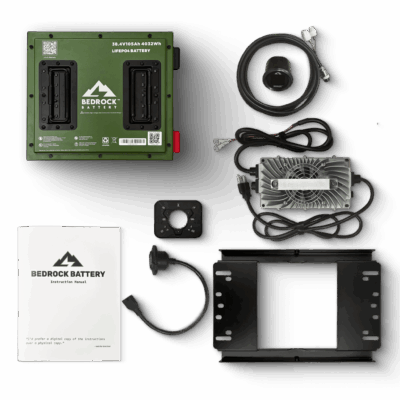
SKU: BB-KIT-36105-DS-RN
or 4 interest-free payments of $437.25
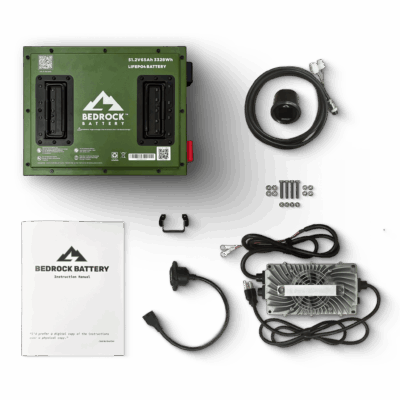
SKU: BB-KIT-4865-PR-RN
or 4 interest-free payments of $387.25
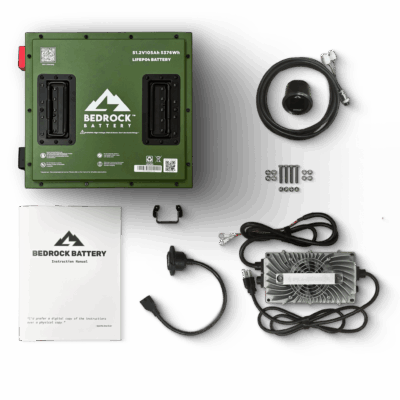
SKU: BB-KIT-48105C-PR-RN
or monthly financing with Klarna or Afterpay
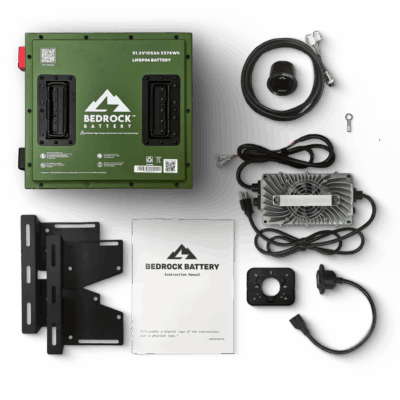
SKU: BB-KIT-48105C-DR11-RN
or monthly financing with Klarna or Afterpay
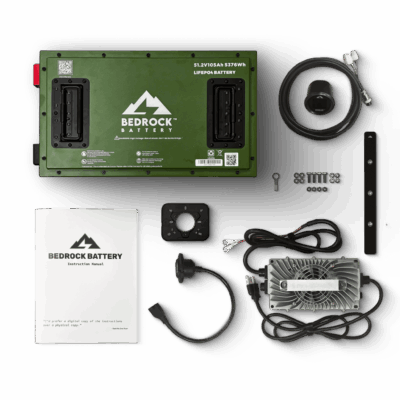
SKU: BB-KIT-48105S-TXT-RN
or monthly financing with Klarna or Afterpay
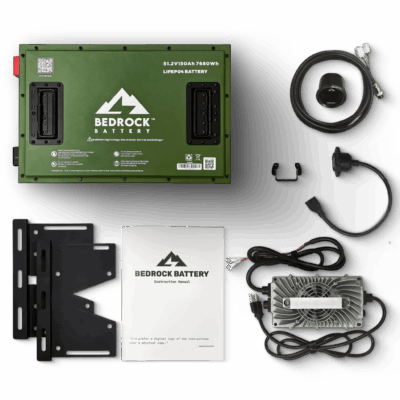
SKU: BB-KIT-48150-PR-RN
or monthly financing with Klarna or Afterpay
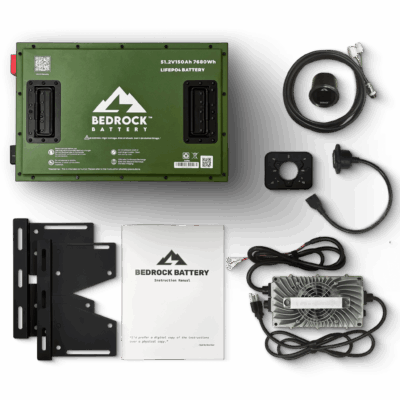
SKU: BB-KIT-48150-ICN-RN
or monthly financing with Klarna or Afterpay
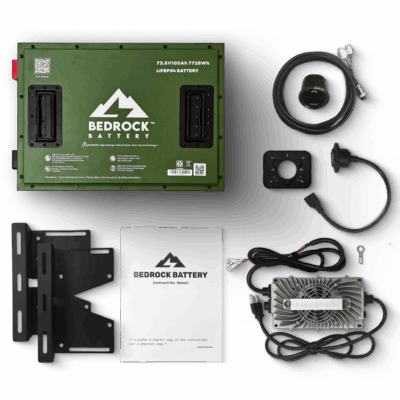
SKU: BB-KIT-72105-TXT-RN
or monthly financing with Klarna or Afterpay
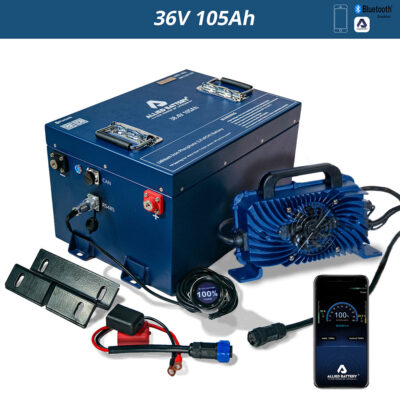
SKU: AB-36V-105AH
or monthly financing with Klarna or Afterpay
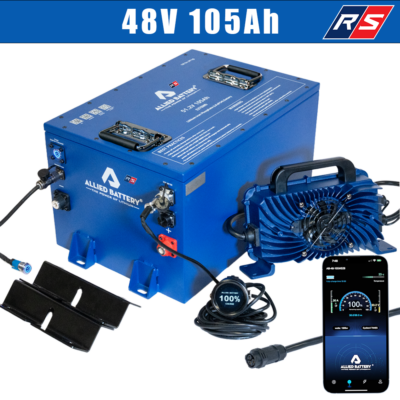
SKU: AB-RS-48V-105AH
or monthly financing with Klarna or Afterpay
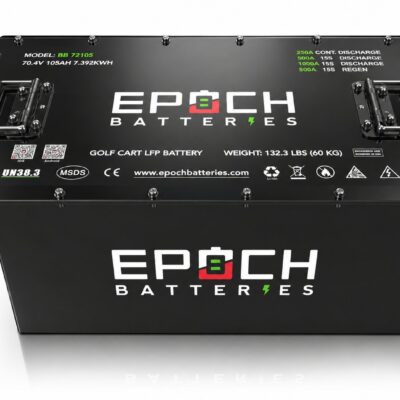
SKU: GCBS-EPC-UNIV-72V105
or monthly financing with Klarna or Afterpay
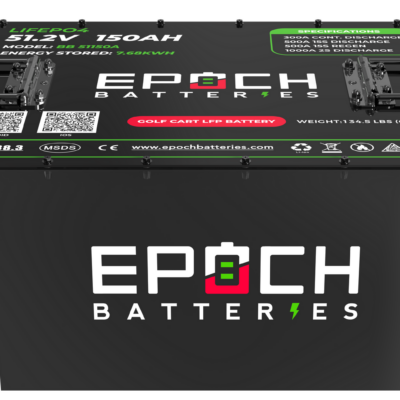
SKU: GCBS-EPC-UNIV-48V150
or monthly financing with Klarna or Afterpay