

This is the buying note for a Denago (Denago carts). Bring the make, model, year, and a tray photo. Denago is easy to mis-file under a more familiar badge. The fitment guide is the current match. An article can explain the cart. It cannot outrank a kit title that names a different tray.
Voltage comes before brand
Confirm voltage on the label or with a meter across the pack. Do not guess from the seat color.
Series math is the whole voltage. Six 6-volt batteries are 36 volts. Six 8-volt batteries are 48 volts. Eight 6-volt batteries are 48 volts. Four 12-volt deep-cycle batteries are 48 volts. A 72-volt cart is a different system. Do not put a 48-volt kit in it and do not put a 72-volt kit in a 48-volt cart. Write the count down. Take a photo of one label that shows the volts. That photo is worth more than the badge on the nose of a Denago.
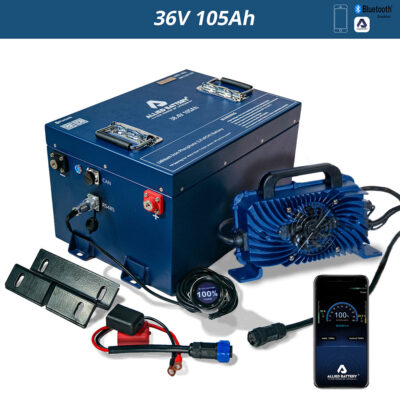
A Denago is a lithium layout: one 36-volt lithium battery. There is no watering cap and no $18 core charge on the lithium battery itself. Do not judge it with lead-acid resting numbers. A full lead-acid 48-volt string sits near 50 volts because six 8-volt batteries rest near 8.4 each, or eight 6-volt batteries rest near 6.3 each. A lithium pack finishes where its own charger and meter say it finishes. The kit meter is the gauge. Leave the lead-acid charger off a lithium battery. Use the lithium charger in the kit. Partial charges are normal. Do not charge a lithium pack below freezing unless that model is heated, and do not charge it in a closed garage that is heat-soaked.
The tray and the bracket
BOLT publishes Denago among the carts it matches. Other brands may not name Denago on a given kit. If the name is not on the product page, do not invent a fit. Named hardware only. A Club Car kit does not become a Denago kit because both are 48 volts.
Brackets are the part that makes a kit a kit. The battery case can look similar across carts while the hold-down does not. On a Denago, Forcing a Precedent bracket because it was in stock. If the holes do not line up, stop. Do not slot the tray with a drill to make the wrong kit fit. Send a photo of the tray.
When a Denago should stay with a lead-acid set
A lead-acid replacement is a full set of the voltage you counted, with the terminal style the cables need. Stay with lead-acid when you want the lowest part price today, you already have a working lead charger, and someone will actually water a flooded set. AGM skips the watering and costs more than flooded. Neither one is a lithium battery. Both carry the $18 core on every battery in the set.
When a Denago should move to lithium
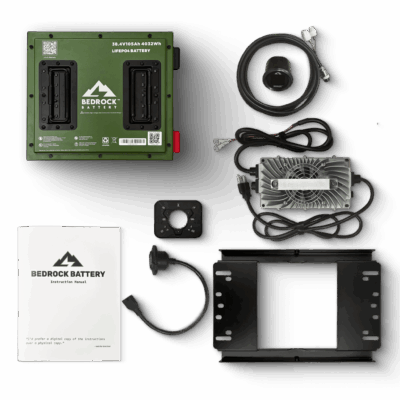
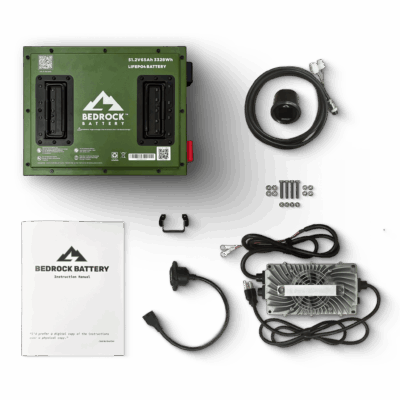
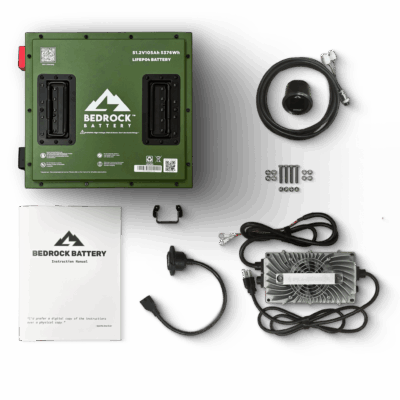
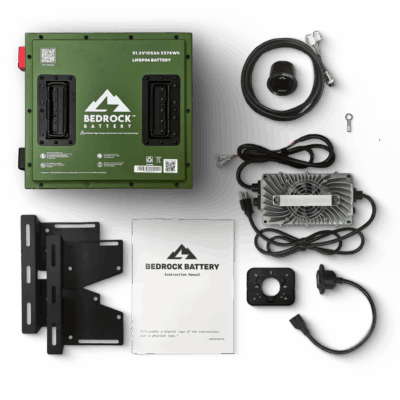
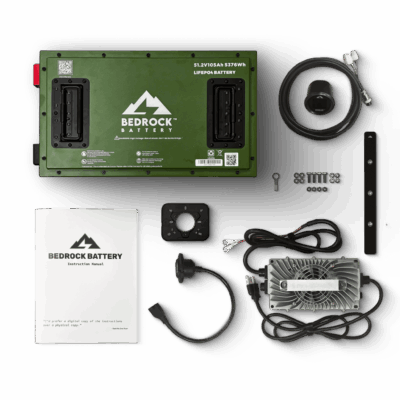
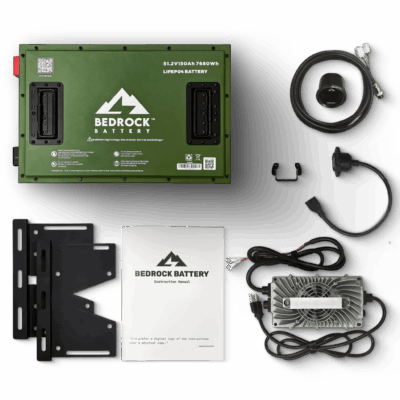
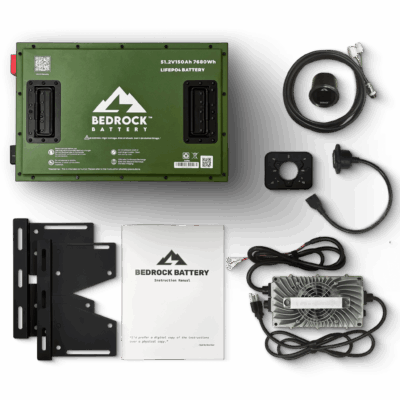
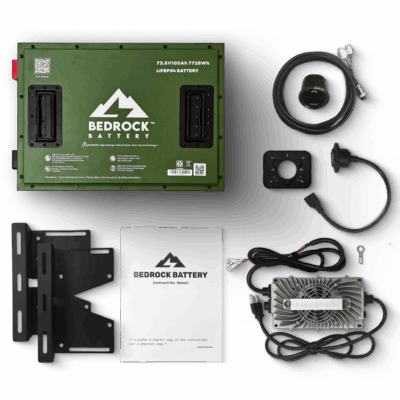
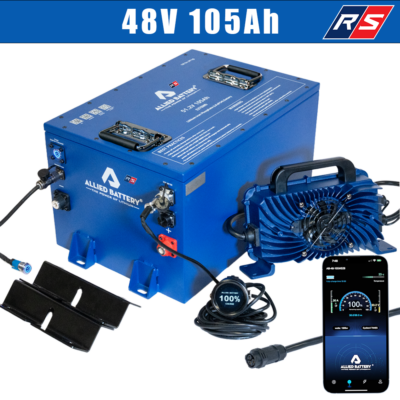
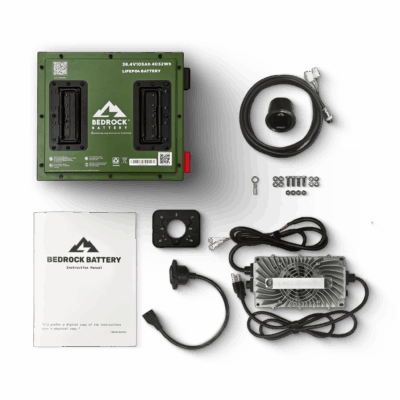
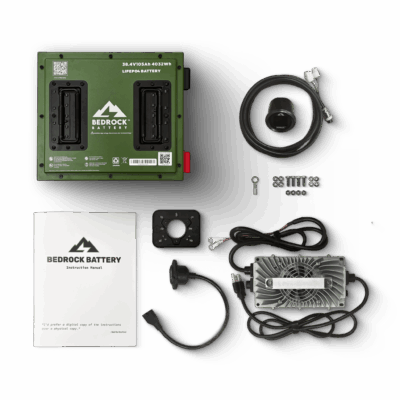
If you convert, the lithium charger replaces the lead charger, and a 48-volt or 72-volt car still needs the matching 12-volt converter if the kit does not include one. Bedrock kits do not include it. Move to lithium when the pack is tired, you are done watering, and the cart’s job is daily driving rather than a short loop. You will buy a kit for this tray, a lithium charger (included with Bedrock kits and with Allied packages), and a 12-volt converter if the kit does not include one. Compare brands on the brand pages. Bedrock’s kit warranty is 10 years and transferable. BOLT’s is 12 years and transferable. ECO’s listings we carry state a limited lifetime warranty, and ECO’s prices follow ECO’s pricing policy. Allied’s listings run 5 or 8 years depending on the line. Those terms are the manufacturer’s, and the product page is the current one.
A worked check on this cart
Bring the make, model, year, and a tray photo. Denago is easy to mis-file under a more familiar badge. Charge the car, unplug it, and let it rest. Then measure. If it is still a lead string, measure each battery and the pack. A single lithium pack that rests a full volt low is the one to condemn, and you still replace the set. If it is already lithium, use the kit meter. Do not declare the pack dead because a lead-acid chart does not match it.
What to send so we do not guess
- Make and model: Denago.
- Year, and which side of any year split the car is on.
- A photo of one battery label and a photo of the tray.
- The voltage you counted, not the voltage you hope it is.
- Whether the car was factory lithium (this matters most on an RXV ELiTE, and it is a fair question on any late model).
Installed, watered, or charged batteries are a final sale except for damage, the wrong item, or a warranty claim. If you are unsure of the Denago tray, ask before you install. Change-of-mind returns are 30 days with no restocking fee, and you pay that freight. If we shipped the wrong part, or it arrives damaged, tell us within 2 days and the return freight is ours. Refunds go to the original payment method within 10 business days of inspection.
A Denago order is ready when the year, the counted voltage, and a tray photo agree with one kit title. Until those three agree, leave the kit in the catalog. Named hardware only. A Club Car kit does not become a Denago kit because both are 48 volts. Send the set through the contact page if the fitment guide’s year bands do not describe the car in front of you.
Parts and pages that match this
- Fitment guide
- 48V lithium batteries
- Matching brand
- 48V lithium
- 36V lithium
- 72V lithium
- Battery sets
- Lead-acid batteries
- 48V/72V 12V converter
- Parts
- Chargers
- Shipping
- Lead-acid vs lithium
- Ask about fitment
- Returns
- Which battery fits this cart
- Hardware mistakes
- Lead set or lithium kit
The price for Denago is the price on the product page, not a number in this article. Bedrock conversion kits ship free. Allied Lithium packages ship free from Allied. That is not a promise that every brand ships free. We ship Denago. We do not list a storefront address. Local delivery is only the area named on the shipping page. A city page on this site is not a statement that a driver covers that city.